

The number of incarcerated youth in the United States plummeted by 75% between 2000 and 2022. There are a number of contributing factors that drove this sea change, and one of them was the quietly effective push to shutter dozens of juvenile facilities across the country.
Our recently published research in the American Journal of Public Health reveals that between 2010 and 2023, governments pledged to close at least 118 of these facilities across 33 states, and successfully closed 62% of them.

What happened during all these closures? The answer is striking: youth arrests fell by 74%, and arrests for violent crimes dropped by 56%. When we reduced the number of youth in these facilities and shut down facilities where these youth might go, youth crime trends went down.
That trend continued until COVID-19, where we saw communities of color and low-income communities disproportionately impacted by school closures and widespread economic challenges. We are only now starting to see those effects slowly reverse.
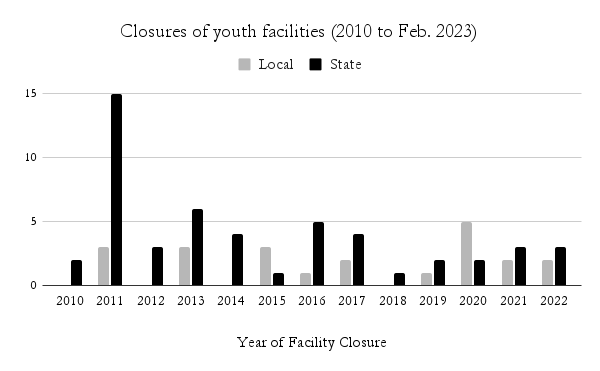
States like Texas, Minnesota, California, and Maryland, along with counties like Sante Fe County in New Mexico, have all closed facilities. Other states like Wisconsin have committed to close their state facilities but have not actually successfully done so. The trend has been widespread — we found 33 states in total had facilities that the local or state governments had committed to closing. The graph below shows these closures have also taken place across the last decade or so, with a peak of state facilities closing in 2011 following the Great Recession.
Why have so many facilities closed? In most cases, the high cost of incarceration became unsustainable, especially as youth incarceration rates fell. In some places, facility staff were found to have perpetrated serious abuse against youth. In others, facilities were closed for maintenance or operational failures. And increasingly, policymakers recognized what the research has long shown: Youth incarceration fails to reduce harm and often makes outcomes worse — particularly for youth of color, who are disproportionately impacted by the system.
Still, closing buildings isn’t enough. And despite the progress made since 2000, the United States still incarcerates youth at a higher rate than any other country.

Our research found that in many cases, closures simply led to youth being transferred to other facilities — sometimes hundreds of miles from their homes. In New Mexico, for instance, young people were moved far from their communities, making it harder to stay connected with their families, attend court hearings or access local services. Without intentional reinvestment in community-based alternatives, the same harms for youth persist.
Closing youth prisons is a critical step — but it’s only the first one. We must pair these closures with a bold reimagining of how we support young people. That means creating safe, community-rooted spaces for youth and families in crisis. It means expanding mental health care, family support, education and youth employment opportunities. It means shifting public and private dollars away from incarceration and toward the kinds of environments where young people can heal and thrive. The evidence is clear: these alternatives work. And they work better than incarceration ever has.

So where do we go from here? Our politicians must face the overwhelming evidence that youth prisons don’t work. More importantly, they must act with courage and conviction, redirecting resources and attention to real solutions that do. But public will is just as essential. We — the voters, community members and advocates — must support bold leadership and demand that public dollars fund care for our youth.
This is our opportunity to not just close youth prisons, but to unlock doors of opportunity — to education, to safety and to healing for these youth, their families and our communities. By closing these facilities and embracing alternatives, we can create a brighter, safer future for all of us.