
Western New York physician Michael Scharf and his colleagues treat the youngest victims at the emergency trauma center — and once they go back home.
When young people get shot or stabbed in Rochester, they are raced to the region’s only Level I adult and pediatric trauma center. Once they’ve arrived at the local university hospital, their violently inflicted injuries are treated, but so are their deeper, ongoing needs.
Child psychiatrist Dr. Michael Scharf and a team of community partners — from emergency room physicians to social workers and violence prevention advocates — work together from the moment a young person enters the University of Rochester Medical Center at Strong Memorial Hospital on a stretcher, to the time they head back into Rochester neighborhoods. Their collective goal? To make sure the child never returns to the hospital emergency room in that state again.
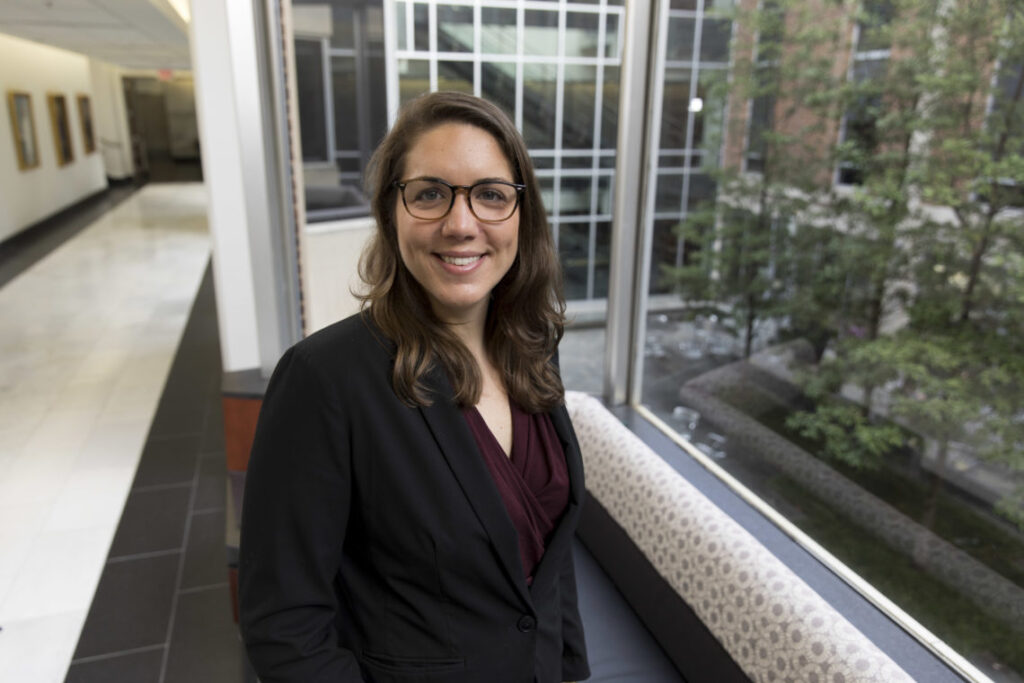
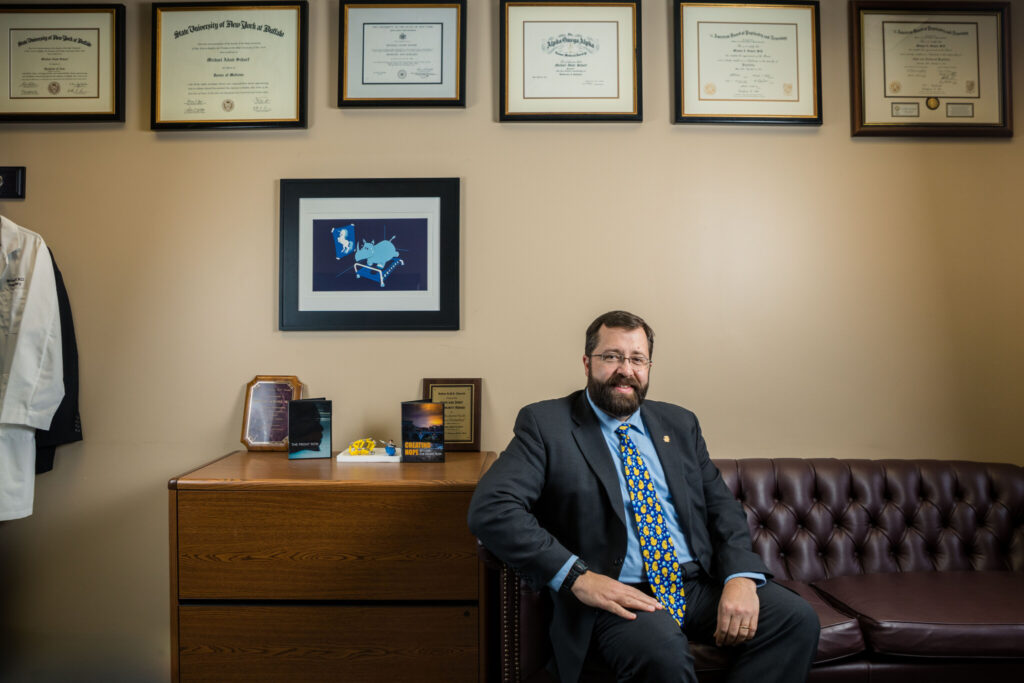
Scharf, a lifelong resident of western New York, is a founding member of the Rochester Youth Violence Partnership and a psychiatrist who has devoted his career to violence prevention, and effective intervention for victims of violent assault.
Since 2006, the partnership has served youth through age 25 and their families through a linkage between hospital staff and more than 30 agencies, including local law enforcement, youth outreach organizations such as Pathways to Peace, government agencies, the state Family Court and numerous nonprofits supporting struggling communities in Rochester, where as many as half of children live in poverty.
On May 10, the Centers for Disease Control and Prevention reported that 2020 saw the largest number of gun-related deaths in the United States, a 35% surge and the highest level of firearm fatalities since 1994. These homicides have disproportionately affected young Black men in the age range served by the Rochester professionals.
Patients admitted to the university trauma center here undergo surgery and other treatments for physical wounds. But Scharf and the psychiatry team are also on hand to talk through their reaction to the acute trauma they’ve suffered, review past and current mental health needs whether related to the trauma or not, and plan with youth and families how they will leave the hospital and get the help they need.
Services upon release for young adults who are victims of stabbings and shootings are voluntary, but for children they can include a social work component and safety and risk assessments, provided in consultation with parents and guardians.
The multidisciplinary program is similar to others nationwide that pair medical staff trained on the impact of trauma with community-based organizations that plan for patients’ safety and outpatient care and services upon discharge. These Health Alliance for Violence Intervention programs nationwide serve violently injured people — many of whom are boys and men of color — with the goal of improving lives and reducing retaliation and return trips to the emergency room.
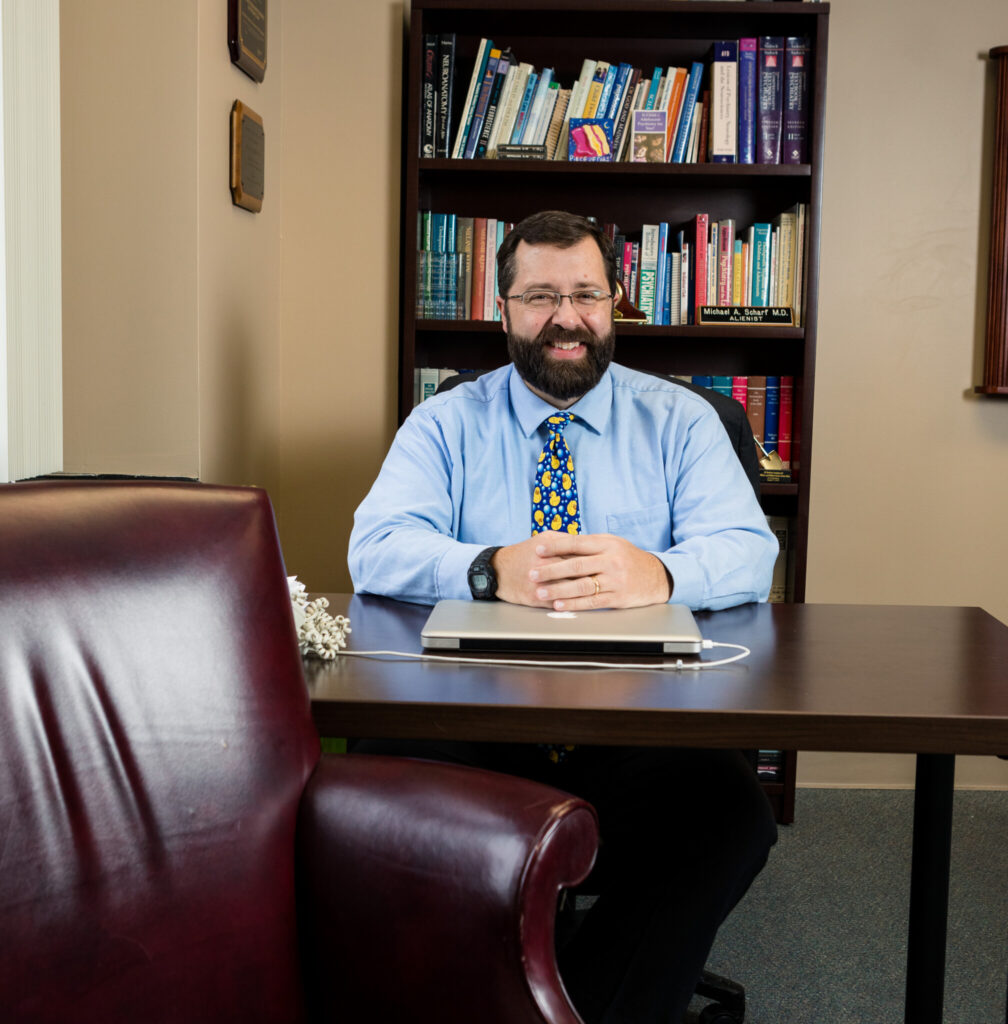
In Rochester, Scharf, 50, plays multiple roles in the partnership. He co-leads monthly meetings, coordinates communication among team members and community partners, and helps train staff and provides some clinical care of patients. He also consults with youth outreach specialists at Pathways to Peace, providing a group experience to discuss the work and to help avoid burnout and vicarious trauma among workers at the community-based agency.
Locally schooled and trained, Scharf, a married father of four, earned his undergraduate and medical degrees at the State University of New York at Buffalo, and completed residency training in general psychiatry and child and adolescent psychiatry at the University of Rochester. In addition to his violence prevention work, he is also a local expert providing education and clinical consultation to primary care doctors as they care for the mental health needs of children.
This conversation has been condensed and edited for clarity and length.
The Rochester Youth Violence Partnership is based on the belief that youth violence is a community health problem that requires a community solution. What is at the core of that belief?
If we talk about violence or homicide as a health care issue, or look at it from a disease model perspective, it doesn’t just exist all of a sudden. It happens in the context of communities, of how conflicts arise, of how conflicts are resolved — or not. You can’t really be an outsider telling people what to do to fix it. Peace has to be owned by the people who are in the community where the change happens.
Compared to some other academic centers that say: “We have the solution, do what we say,” we’re trying to make it very clear that is not what we’re about. We’re about working with the community and the community telling us what to do to be more effective. I think of the community as us. We are the community at the hospital. And some of that’s the nature of Rochester. It’s the nature of the size of the community.
At the same time, I do recognize there’s long histories of racial inequities and injustice that our hospital and our institution, historically, has been a part of.
You are a founding member of this partnership. What motivated you in 2006 to launch this program? What were the gaps you were hoping to fill?
A trauma surgeon, Mark Gestring, a pediatric social worker, Jeff Rideout, and myself were commiserating over these kids who kept coming back with the same injury over and over. There was one case we were focused on when a child was injured three times and then killed.
We took a stance of: We have to do something about this. We can’t just be tolerant of the idea that the same youth is patched up, then recognizing that it’s not enough, and they come back injured in the future. We have to do more.
What role do nonprofits, government agencies and service groups play in your patients’ lives, before and after discharge?
Some of the big differences between our program — and actually every other one I’m familiar with — is the street-level responses in real time. So if someone is shot at 2 a.m. on Friday, somebody from Pathways to Peace gets the page and they come. Not the next business day.
Sometimes Pathways to Peace helps figure out the story. Is there a conflict? Should we be out in the streets doing conflict resolution and trying to settle things down? We have a number of tools to try to get people’s attention and motivate them to think about healthier, long-term options for their lives. It’s really individually based.
I’m a psychiatrist, and if I’m talking to someone, I do a mental health evaluation and talk about mental health supports, but if they’re more comfortable talking to a social worker, great. We don’t have a pre-existing idea of which service they need to use, or that successful connection with ‘Service A’ is always the right answer.
Can you paint a picture of a youth who comes into your care? What’s a typical case that you’ve seen?
The stories that are unfortunately common would be someone who’s had multiple penetrating injuries, a shooting, then comes into the emergency department for another shooting or stabbing. And then, we see them multiple times. Then we’re worried that the next one will be dead. Unfortunately, that is often what happens.
Nationally, the best data showed that if you’re an adolescent and you’re shot, the likelihood that you’ll die by violent means in the next five years is as high as 20% — that’s outrageously high. We’re trying to come up with a way to help folks find something they’re motivated to change.
“Peace has to be owned by the people who are in the community where the change happens.”
Dr. Michael Scharf
What role does law enforcement play when a child is hospitalized?
When the person’s in the hospital, the police officer’s role is to investigate the crime that’s happening.
We don’t try to put ourselves or our partners in the way where they do anything to hinder the investigations or to make our patients feel uncomfortable. Obviously there’s some things in criminal investigations, which we would tell, like the fact that there was a shooting. But we maintain really strict boundaries about information and our role during an active investigation when the kid is actually in the hospital.
Sometimes we’re engaging with law enforcement in a collaborative way with the patient and with the family about catching who did it, or figuring out if they’re going to be safe when they go home. The police don’t necessarily provide the resources for that, but they’re an important part of figuring it out sometimes.
At The Imprint, we’ve been covering the reaction to recent uptick in violent crimes, politicians’ law-and-order pledges, and the impact on juvenile justice reforms that aim to treat youth who commit crimes differently than adults. Do you follow this news, and if so, what does it bring up for you?
I was a big advocate of Raise the Age. I continue to be a big supporter of the move to have adult criminal court as is, without modification: 18 and up, and a more developmentally informed process for those younger than that.
What I think has not rolled out the way many anticipated is what happens after, or instead of jail or prison sentences. Our detention centers across the state are very challenged now by COVID. I think you can have all the benefits of youth court and still have meaningful consequences. It was anticipated, certainly by me, that there will be more diversion resources that haven’t really come to fruition.
Are the hospital staff who deal with victims of youth violence specially trained? If so, can you give me an example of how that care is specialized?
We have avoided having certain staff be the trauma workers or the violence intervention workers and other staff not. All of the things we’ve done have been to systematically change so that no matter when someone comes in shot or stabbed, our emergency department and our staff is prepared to give exactly the same support and response.
On the other hand, they absolutely get training on how to do it. A lot of the questions overlap with what social workers do anyway. There’s no need to take a special course or degree program, but there is specific orientation to the process.
You’ve been a child psychiatrist for more than 20 years. How has the field evolved in terms of treating emotional and physical effects of trauma and how do you incorporate these developments into your work?
One of the most important things that’s evolved since I started training as a child psychiatrist is the greater emphasis on adversity and trauma. The challenging adverse traumatic things that happen in childhood — particularly early childhood — predict depression, personality disorders, post-traumatic stress disorder, substance use disorders, heart disease, obesity and other physical health problems. The way that academic medicine looked at data in the late ’90s has moved from something that’s really interesting people read about, to the forefront of children’s mental health education, and even pediatric primary care and medicine as a whole.
It’s a change in awareness and orientation. What were the things that happened in your life to get you to where you are now? And some of that is biology, genetic risk. But we are increasingly aware that that’s actually not sufficient — that it’s also life experience. It’s a change that I welcome.
How has your work with your partners helped draw these conclusions?
I trained in Rochester, and Rochester is the home of the biopsychosocial model since the late ’70s. I feel like I was well prepared for this transformation.
It’s not just for the kids who are the violence victims, but also kids that get labeled as ‘bad kids,’ who are in what some refer to as the school-to-prison pipeline. It’s seeing youth who are either at a high risk of — or who have already been labeled as — a ‘bad person’ engaging in ‘bad’ behaviors, and seeing that if you take the time to get to know and understand these youth, no one is born the bad seed.
What have you been able to measure in terms of the impact of your program and its ability to prevent future violence or to heal the wounded?
That is a great question. It highlights one of the areas we’re struggling with right now. The best data we have is in our own health system’s record. We have a lot of stories and anecdotal evidence from people who have met us through their treatment when they were injured. But a lot of the people we don’t hear from again. When we have done the analyses, we have lowered the rates of re-injury from the lens of our own health system.
How much of those trends can we attribute to work we’ve done? I don’t have a good answer as an academic. I can’t say that I have science to prove that we were part of the downward trend as it was happening.
But again, we have these anecdotes. One thing that I can say is, we really have changed the culture. The phrase “treat ’em then street ’em” is heard — where you’re going to patch it up and get them out as fast as possible. We’re the complete other way around. We don’t run away from the trauma — we run toward it. So again, hard to point to numbers. We certainly haven’t solved the problem. But we have some powerful stories.
Do you have plans to expand the work you’re doing and if so, what lessons would you offer others interested in similar efforts?
In regard to data, this is the one area where deliberately not organizing an entity, or having a budget, has become a bit of a hindrance. In order to have data beyond our medical record, someone has to own it. There are examples of other violence-reduction and hospital-based violence programs that do it well.
Starting a program would need to include a sustainable way to collect data and look at it. It has to not only include health care outcomes for your health system, but for all the health systems in the region. And it has to include criminal justice data. If I see someone right after the shot, and then all I know is that in the next two years they were never seen as a victim in an emergency room again — that looks awesome. But if the reason is because they’ve been incarcerated then that is a different meaning.
We don’t want this to be a special project with extra funding that comes for a while then the funding runs out and it goes away. We want this to be how we do business and health care, and that’s what we’ve achieved.