


Paul Vincent, who led a memorable court-ordered reform of Alabama’s child welfare system, passed away last month at the age of 79.
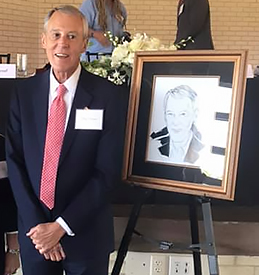
Vincent served as Alabama’s child welfare director during and after the settlement of R.C. v. Fuller, a lawsuit brought over the system’s treatment of children with serious mental health needs. The reduction in foster care, and improvement in services for youth in the system, made it one of the more heralded class-action strategies.
The state exited court oversight in 2008. It is now back in court facing a similar lawsuit over its treatment of youth with mental health needs, brought by some of the same litigants who filed the R.C. lawsuit decades before.
But while Alabama is alleged to have backslid since the R.C. case, Vincent’s approach — built on more scrutiny about removals and family conferencing early in cases, among other things — became the backbone of a strategy he developed as founder of the Child Welfare Policy and Practice Group (CWG). The consulting firm has assisted in court monitoring and advising for systems including New York City, Utah, Tennessee, Los Angeles and South Carolina. In New York, Vincent was part of a panel that is credited with helping to spark a sea change in the city following the settlement of a class-action lawsuit.
From a 1996 piece in the New York Times, contrasting Vincent’s work to the struggles of other states at the time:
In Alabama, conditions for abused and neglected children have improved considerably as the state carries out a consent decree approved by a Federal district judge four years ago. Statewide, the number of children in foster care has declined 21 percent, to 3,650 from 4,625, since then. In the first counties carrying out the decree, the average time spent in foster care has declined to 100 days, from more than 300.
Paul Vincent, director of the Alabama Division of Family and Children’s Services, said the state now provided extensive training to foster parents and caseworkers, who in the past received “little or no formal training.” Ira A. Burnim of the Bazelon Center for Mental Health Law, who represents the Alabama children, agreed. “The kids are safer,” he said. “Protective service workers are doing better jobs.”
“I think one of Paul’s greatest skills was insisting that we see our work and child welfare in general from the families’ perspective, not from the usual point of view of policy, procedure or compliance,” said Jerry Milner, co-director of the Family Justice Group, who followed Vincent as Alabama’s director and went on to lead the U.S. Children’s Bureau during the first Trump administration. “He pioneered the concept of being family and community driven and leading with humility and compassion. The genius of his leadership was rooted in simple truths about the value of parents and children, and clarity about mission and vision.”
Vincent started CWG in 1996, and led it until his retirement in 2019, at which point he was inducted into the Alabama Social Work Hall of Fame.