


Not long before departing Congress to successfully pursue the mayor’s office in Los Angeles, former U.S. Rep. Karen Bass introduced a bill that would dramatically rewrite the federal rules around terminating parental rights.
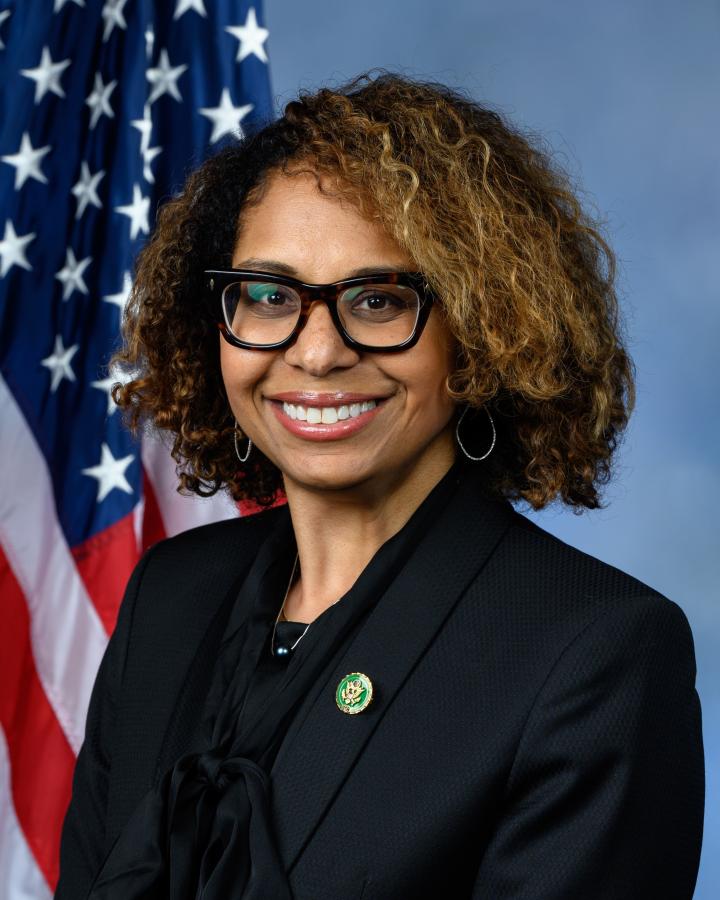
Bass’ bill, the 21st Century Children and Families Act, has now been picked up by her successor representing the 37th Congressional District in Los Angeles, Rep. Sydney Kamlager-Dove, a fellow Democrat.
Kamlager-Dove announced in a press release this afternoon that she intends to introduce the bill again.
“We know that children achieve better outcomes when they remain with their families,” said Kamlager-Dove. “This bill would make it easier for children entering the foster care system or adoption process — especially those from marginalized communities — to remain with their relatives so these children can succeed.”
Georgia Democrat Rep. Hank Johnson has signed on as a co-sponsor of the 21st Century Children and Families Act.
Youth Services Insider has obtained a copy of the bill’s text, which should soon be available at Congress.gov, and Kamlager-Dove’s bill appears identical to that of her predecessor, with the exception of the date it takes effect. Here is what the main provisions of the 21st Century Children and Families Act would do:
Parental Rights: It rewrites the timelines around termination of parental rights (TPR) that became law in 1997 via the Adoption and Safe Families Act, or ASFA. That law requires state child welfare agencies to begin pursuing a termination if a child had been in foster care for 15 of the past 22 months.
There are some notable exceptions, the biggest being children living in kinship care. There is also a somewhat malleable “aggravated circumstances” rule that permits states to seek termination much faster in certain cases.
This bill would eliminate a federal requirement to pursue TPR, and goes further by saying that states could not initiate such a proceeding unless 24 months had passed, with the exception of aggravated circumstances cases.
Discrimination: The bill adds sexual orientation, gender identity and religion to federal child welfare nondiscrimination protections that previously only included race and ethnicity. Under the proposed law, states and agencies that contract with the federal government could not “deny to any person the opportunity to become an adoptive or a foster parent” based on those additional factors.
The legislation retains current legal requirements that adoptions cannot be delayed to match children with families of the same race, gender, culture and religion. But it instructs states to consider those factors if that is requested by the child or their birth parent.
It’s hard to know what to make of this based solely on the announcement. For starters, and this was true of the Bass iteration too, the anti-discrimination element sort of renders the act a messaging bill, because it’s doubtful any Republican would sign on to co-sponsor something with the sexual orientation and gender identity provisions. There are a dozen states with laws expressly permitting faith-based discrimination, most under complete Republican control; the provisions in this bill would mean those state laws jeopardize federal funds for child welfare activities.
Kamlager-Dove surely knows this. In her announcement of the bill she said, “As Republicans across the country lead efforts to roll back marginalized groups’ rights at the state level, we must guard against discrimination in all policy arenas through federal legislation.”
Could there be a bipartisan appetite for the rewrite of ASFA? It’s possible. There is an innate parental rights element to the changes, and bipartisan agreements on that cause have spurred pretty significant changes at the state level in recent years.
So it’s a steep hill for this to ever lead to a complete overhaul of the Adoption and Safe Families Act. Kamlager-Dove would need to be amenable to cleaving off just the timelines provisions and adding it to some bigger legislative vehicle; perhaps the reauthorization of Title IV-B that is now overdue? It would help if the bill had a co-sponsor assigned to the House Ways and Means Committee — perhaps Gwen Moore, who championed protections for parents rights during the height of the COVID pandemic — who might be able to get a hearing on the issue of timelines and TPRs.
There is an external factor at play as well. There is a fervent movement to fully repeal ASFA, although some advocates who would like to see the law completely dismantled did support Bass’ version of this bill three years ago. But if there is very vocal pushback and opposition to these changes, that would probably kill any momentum for a bill that in most foster care cases ends a mandatory termination requirement and replaces it with a mandatory waiting period.