
A bill taking effect July 1 will allow adopted Georgians to learn more about their origins, including where they were born and the names of their biological parents.

Obtaining a copy of an original birth certificate in Georgia is typically a straightforward task for most — fill out a request form, pay a $25 fee and it’s yours.
The process hasn’t been so simple for adult adoptees.
Because of a longstanding state law that sealed their birth records, adoptees have had to obtain court orders, hire attorneys and, in some cases, seek permission from adoptive and birth parents just to get their hands on the same piece of paper.
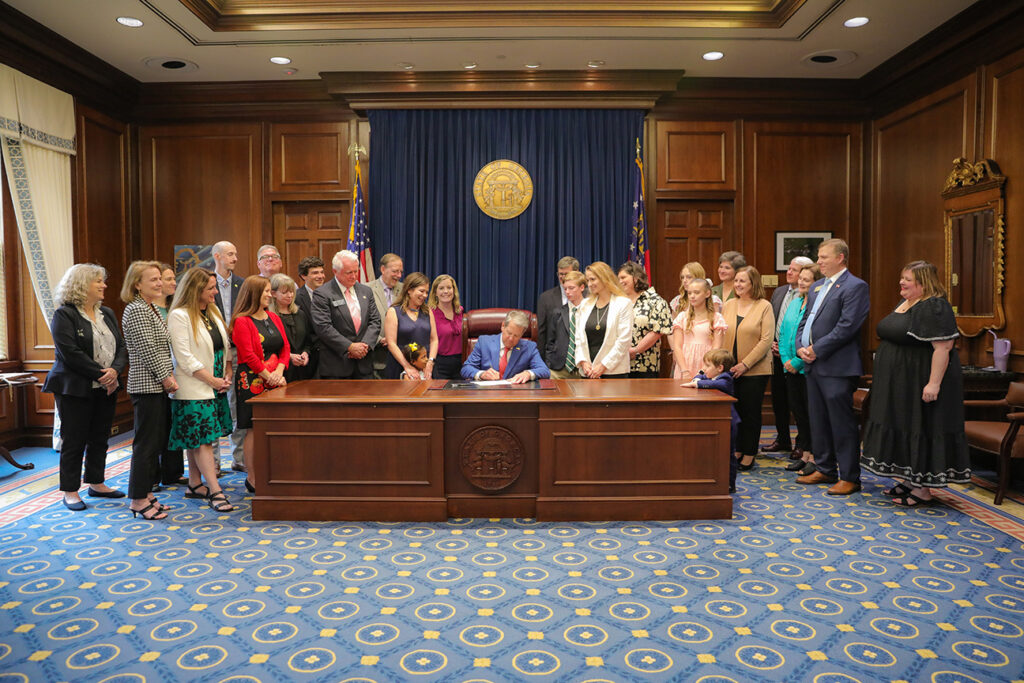
But a fight to overturn that nearly 65-year-old restriction ended this month when Gov. Brian Kemp signed Senate Bill 100 into law, allowing Georgia-born adoptees over the age of 18 to secure copies of their original birth certificates from the state’s Office of Vital Records. Similar legislation was introduced in 2023 and 2024 but never made it to the governor’s desk.
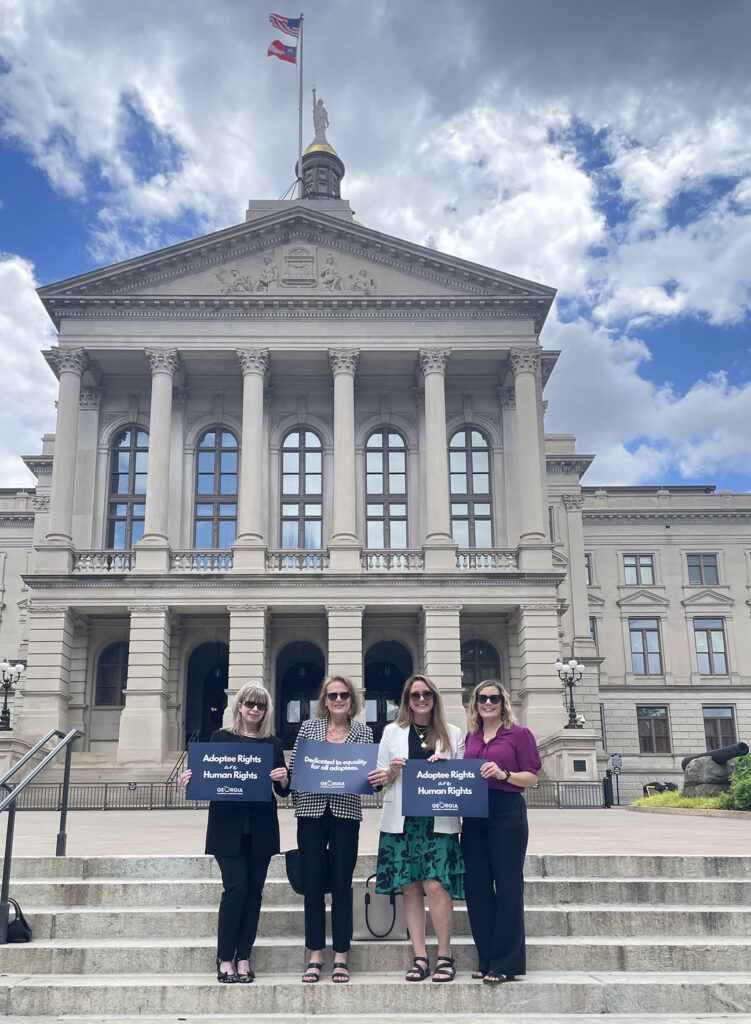
Since the law’s passage, the Georgia Alliance for Adoptee Rights has fielded a flurry of excited calls and social media messages from adoptees, said Jamie Weiss, co-founder. The organization has been at the forefront of the push for the legislation, which takes effect July 1.
“It’s a relief,” Weiss said. “It’s truly a relief.”
The two co-sponsors of the legislation, who are adoptive parents themselves, told The Imprint that the law change restores a basic right.
Sen. Randy Robertson named the bill, dubbed “Andee’s Law,” after his adopted daughter. Adoptees should not be held to a different standard than everyone else, he said.
“It moves that line that used to be between biological children and adoptive children,” Robertson said. “The turnout on the day the governor signed from the adoption community was just incredible.”
Rep. Joseph Gullett said easing access to these records doesn’t “undo adoption or change families” like his.
“It does provide fairness, dignity and the opportunity to know more about one’s beginnings,” Gullett said in a statement to The Imprint. “I was proud to carry this legislation and to stand with adoptees who have long advocated for this change.”
With just weeks to go before the law goes into effect, Georgia’s Office of Vital Records is now preparing for a challenging task.
Although a court order is no longer required, adoptees will need to make an appointment with the Office of Vital Records to gain access to the “sealed” documents, because retrieving them will require more manual work. The department told the Imprint that the state has hundreds of stored boxes of adoption files, many of which are on microfiche and microfilm.
Weiss said adoptees calling her group are asking about those next steps. Often, adoptees are provided amended birth certificates listing their adoptive name and parents. But many pursue access to their original records to reconnect with biological families, understand their origins or learn their medical histories. Others want the document because it is simply a missing piece of their identity.
“It’s just to be able to have those facts in black and white in front of you,’’ Weiss said. “That connection to who you are, you started out being, is huge.”
From secrecy to transparency
With the law’s passage, Georgia has become part of a growing movement to grant adoptees access to their original birth records. Since 2019, 16 states have loosened prior restrictions, including New York, Minnesota, Connecticut, Louisiana, Massachusetts, Vermont and South Dakota.
The process wasn’t always so secretive in Georgia, where birth records were open until 1961. That year, the state became one of many around the country that moved to establish more restrictive laws in response to growing privacy concerns for biological parents — particularly unwed mothers — who often faced societal condemnation.
Such concerns came up in court for adoptee Gregory Luce, a Minnesota-based attorney and founder of the Adoptee Rights Law Center. When he sought access to his original birth certificate, he had to submit a quilt his birth mother gifted him before she died to prove her consent.
“We had already reunited, but it didn’t matter,” he said. “That’s the level of proof. You have to prove someone else wants you to have it, as opposed to you being entitled to it.”
But hard lines have softened over recent decades, even among adoption advocacy groups that harbored fierce privacy concerns in the past.
The National Council for Adoption, a nonprofit that advocates for birth parents, adoptive parents and adoptees, has historically favored “mutual consent registries,” which require both parties to agree to share information. At least 30 states have such registries.
“It’s just to be able to have those facts in black and white in front of you. That connection to who you are, you started out being, is huge.”
— Jamie Weiss, Georgia Alliance for Adoptee Rights
In 2016, the group’s president, Chuck Johnson, told Stateline that his organization’s primary concerns revolved around the privacy rights of biological parents who believed their identities would never be revealed after the adoptions were finalized.
“They’re expecting their state to honor the conditions in place when they relinquished their children,” Johnson said.
But Ryan Hanlon, the group’s current CEO and president, said he believes it is now largely recognized among adoptive agencies that preserving privacy is unrealistic, especially with the proliferation of DNA kits and social media. Additionally, many adoptions today already include some shared information and involve ongoing contact, he said.
He expects more states to move away from mutual consent agreements and follow Georgia’s lead.
“You go back 15, 20 years plus, absolutely, you’ll find lots of opposition to birth record access,” Hanlon said. “Now, it’s not a new thing.”
Georgia adoption and family law attorney Jim Outman has pushed for such reforms for more than two decades.
For years, he has helped adoptees obtain their records — and “hated doing it.” The process would take at least two to six months. And before coming to him, some adoptees had already paid thousands of dollars to other attorneys who couldn’t get the records.
He has also long advocated for another right he believes is necessary for preserving people’s heritage: Securing rights to original birth records for parents, siblings and descendants of adoptees who have died.
Outman’s advocacy was successful — that provision was included in the new Georgia law.
But when he first began fighting for this kind of access, he didn’t realize that it would become meaningful to his own family.
In 2020, his adopted adult son died. He now plans to request his original birth certificate.
“Part of me would like to reach out to his birth mother and tell her that he passed, because I’ve got to believe that if she’s still alive, she wonders,” he said.